The keyword connectivity hssgamepad captures a central concept in modern interactive entertainment: the relationship between hardware, user input, and digital environments. As gaming continues to evolve, controllers have moved far beyond simple button layouts. They now represent complex communication systems that translate human motion, intention, and tactile feedback into real-time virtual actions. Connectivity hssgamepad reflects this progression, symbolizing how modern gamepads integrate with devices through wireless protocols, input standards, firmware, and ergonomic design to create seamless user experiences.
Gaming is no longer limited to a single device. Players now move across PCs, consoles, mobile phones, tablets, handheld systems, smart TVs, and cloud-based gaming services. This diversification makes controller connectivity critical. Connectivity hssgamepad becomes a lens through which we can analyze multiple dimensions of modern gaming technology, including hardware protocols, compatibility frameworks, latency management, wireless standards, haptic feedback systems, and the broader cultural meaning of ergonomic input devices.
To understand connectivity hssgamepad comprehensively, we will examine the intersections of gaming hardware, human input, device compatibility, wireless communication standards, user experience optimization, and digital interaction.
The Modern Controller Landscape and the Concept of Connectivity Hssgamepad
Controllers are a central component of gaming hardware. When users think about connectivity hssgamepad, they are acknowledging the technical infrastructure that allows controllers to interact effectively with digital games. The modern controller ecosystem includes:
Traditional console gamepads
Wireless Bluetooth controllers
USB-connected PC controllers
Mobile clip-on controllers
Customizable esports controllers
Adaptive input devices
Virtual controllers
Cloud gaming input devices
Each variant depends on connectivity protocols to establish communication with host systems. In this environment, connectivity hssgamepad represents a hardware identity and functional requirement: input systems must be reliable, low-latency, and compatible across device categories.
Human-Machine Input Systems and the Role of Connectivity
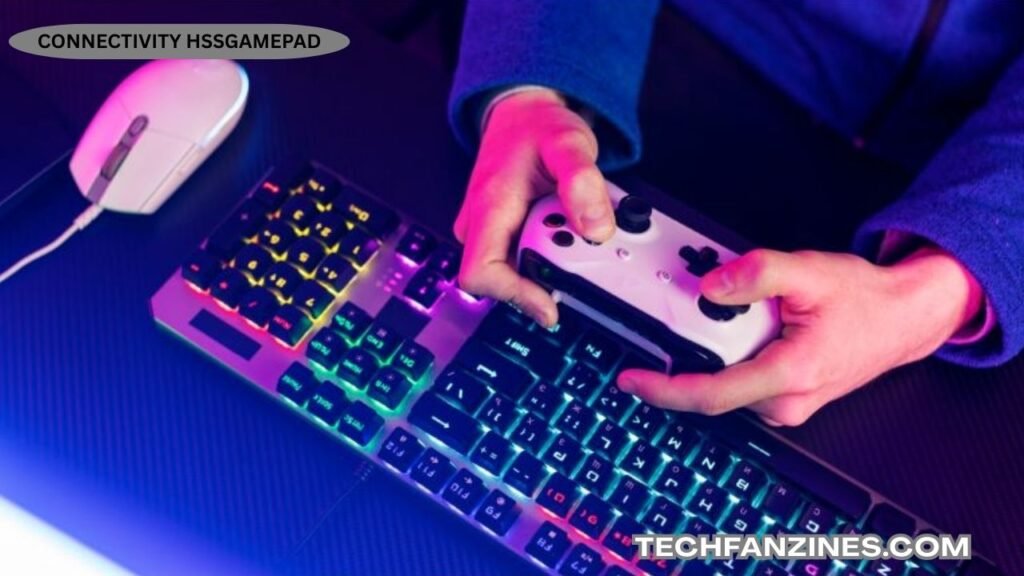
Game controllers act as translation devices between human intention and digital output. Connectivity hssgamepad emphasizes the importance of this translation layer. Input systems rely on:
Button presses
Analog stick movement
Trigger sensitivity
Haptic vibration feedback
Gyroscopic motion sensing
Touchpad input
Custom button mapping
Adaptive trigger resistance
These signals must travel from the controller to the game without delay. This is where connectivity becomes essential. A poorly connected device disrupts gameplay, affecting accuracy, immersion, and user satisfaction.
Wireless Communication Standards in the Context of Connectivity Hssgamepad
Wireless connectivity has become standard in gaming hardware. Connectivity hssgamepad suggests compatibility with multiple protocols including:
Bluetooth (common for PC, mobile, and smart devices)
2.4 GHz dongle receivers (often used for lower-latency PC gaming)
Wi-Fi Direct (used by some consoles)
Proprietary console pairing systems
Each standard offers distinct advantages and trade-offs:
Bluetooth:
Wide compatibility
Moderate latency
Low energy consumption
2.4 GHz Dongle:
Lower latency
More stable connection
Limited to dongle-equipped devices
Wi-Fi Direct:
Fast transfer rates
Console integration
Higher energy use
Connectivity hssgamepad implies that the controller’s usability depends on how well it negotiates these communication layers.
Latency and Real-Time Responsiveness
In gaming, latency is the delay between input and on-screen action. Connectivity hssgamepad is closely tied to latency performance. Low latency improves:
Player precision
Competitive responsiveness
Rhythm game timing
Fighting game inputs
Shooter accuracy
Driving simulation control
Competitive players (particularly in FPS, fighting, and esports titles) demand near-zero latency. Connectivity problems can cost matches, reduce immersion, and create frustration. Modern controllers therefore incorporate optimized transmission protocols to minimize delay.
Compatibility Frameworks and Device Ecosystem Integration
Gaming now spans many device categories. Connectivity hssgamepad implies that controllers must interface with:
PC operating systems (Windows, Linux, macOS)
Console platforms (Xbox, PlayStation, Nintendo)
Mobile ecosystems (Android, iOS)
Smart TVs and streaming devices
Cloud gaming services (various platforms)
VR and AR systems
Compatibility involves not just connectivity but also:
Driver support
Input mapping standards
Firmware recognition
Platform restrictions
Operating system updates
For example, a connectivity hssgamepad solution may support XInput for PC gaming, MFi for iOS, or DirectInput for legacy titles. Without compatibility frameworks, even the most advanced gamepad cannot function properly.
Ergonomics, User Comfort, and the Physical Design Layer
Connectivity hssgamepad also reflects how hardware is shaped for human comfort. Controller design influences:
Grip style
Hand fatigue
Thumbstick precision
Trigger ergonomics
Button travel distance
Muscle memory
Long-session usability
Modern gaming sessions can last several hours, making comfort essential. An ergonomic controller ensures that connectivity is not just functional, but comfortable enough for prolonged use.
Customization, Personalization, and Adaptive Gaming Controls
Customization is increasingly valued in gaming culture. Connectivity hssgamepad can extend into firmware-level personalization and adaptive control schemes. Customization options include:
Button remapping
Trigger sensitivity adjustments
Dead zone calibration
Stick tension modifications
Macro programming
Gyro sensitivity settings
These allow players to tailor input devices to personal preference, game genre, or ergonomic needs. Adaptive controllers extend this further by enabling accessibility for players with physical disabilities—making connectivity part of inclusive design.
Firmware, Software, and Continuous Controller Updates
Modern controllers are software-enabled devices. Connectivity hssgamepad implies that firmware may update over time to:
Fix bugs
Improve connectivity
Optimize latency
Add new features
Expand compatibility
Improve battery usage
Firmware ecosystems allow controllers to remain relevant as gaming platforms evolve. This reflects the shift from static to dynamic hardware experiences.
Battery Management and Wireless Power Considerations
Wireless connectivity introduces battery constraints. Connectivity hssgamepad therefore intersects with power design, including:
Rechargeable lithium batteries
Battery capacity (mAh ratings)
Low-energy Bluetooth modes
Sleep mode or idle timers
Charging docks or cables
USB-C vs micro-USB vs proprietary ports
Gamers expect controllers to last long without frequent charging, especially during travel or extended play.
Haptic Feedback, Immersive Response, and Sensory Integration
Immersive technologies add tactile communication from game to player. Connectivity hssgamepad also symbolizes bidirectional input-output systems where hardware not only sends input but receives information to generate feedback. This includes:
Rumble motors
Haptic actuators
Adaptive triggers
Gyroscope response
Force feedback motors
Enhanced feedback increases emotional connection to gameplay, making input feel like part of the virtual world rather than an external control method.
Cloud Gaming and the Future of Controller Connectivity
Cloud gaming eliminates local hardware rendering and streams gameplay from remote servers. Connectivity hssgamepad becomes crucial in cloud gaming because:
Controller input must travel to the server
Server must process actions rapidly
Output must return to the device with minimal lag
Cloud gaming platforms depend heavily on strong connectivity to maintain playability. Controllers optimized for cloud gaming may integrate:
Direct Wi-Fi connectivity
Low-latency protocols
Cross-platform compatibility
Companion app configuration
Hot-swapping between devices
This trend will expand as cloud gaming scales globally.
Esports Application and Competitive Controller Standards
Esports has elevated controller performance expectations. Connectivity hssgamepad is relevant to competitive gaming where:
Microsecond-level input matters
Drift or desync is unacceptable
Durability meets extreme usage
Latency optimization is required
Esports-level controllers may offer:
High polling rates (for faster input recognition)
Wired competition modes for zero-latency
Removable parts for maintenance
Tournament legal standardization
This sector drives innovation in controller connectivity technology.
Cultural Meaning of Modern Gaming Controllers
Beyond technology, connectivity hssgamepad has cultural significance. Controllers represent:
Entry into virtual worlds
Social connection with friends
Personal identity within gaming spaces
Participation in shared entertainment culture
Controllers carry emotional meaning in the same way musical instruments or sporting equipment do. They are tools of expression and performance.
Conclusion
Connectivity hssgamepad symbolizes the intersection of hardware innovation, human input, wireless communication, user experience, and cultural engagement in gaming technology. As gaming systems diversify across platforms, the importance of reliable connectivity grows—ensuring that players can interact fluidly with digital worlds regardless of device or environment.
Controllers have evolved from simple buttons to complex interfaces that integrate ergonomic design, low-latency wireless technology, firmware intelligence, haptic immersion, and cloud compatibility. Connectivity hssgamepad reflects this evolution, demonstrating how vital seamless controller integration has become for modern gaming experiences.
The future of gaming input devices will likely involve deeper immersion, smarter connectivity, cloud-first optimization, richer haptics, adaptive accessibility features, and standardized cross-device communication—ensuring that gaming remains one of the most interactive forms of entertainment on the planet.